

What “Silence” Means on the Frontline - and Why Soldiers Fear It

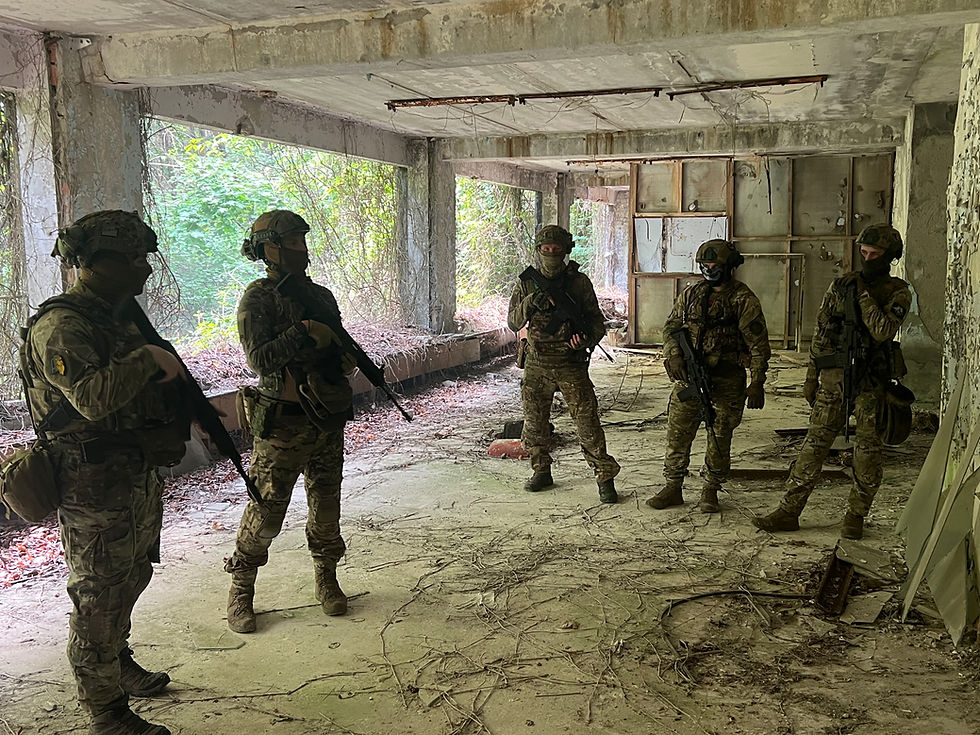
There is one thing that is very difficult to explain to someone who has never been close to war. On the frontline, people eventually begin to fear silence. Not explosions, not artillery, not even constant danger itself, but those moments when everything suddenly goes quiet. For a civilian, this sounds strange because silence is usually associated with peace. People leave the city to “escape the noise.” They buy apartments in “quiet neighborhoods.” They post photos of coffee near a window with captions like “finally some peace and quiet.” Only war teaches a person that sometimes silence can become the most disturbing sound of all.
Inside a combat unit, people quickly get used to chaos. At first, the brain tries to react to everything at once. Artillery. Drones. Explosions. Constant movement. Radios screaming like their main mission is not communication but destroying everyone’s hearing. Over time, however, the human body adapts. What looks like complete chaos to a civilian slowly becomes normal background noise to a soldier. That is why in the Atey Battalion, just like in many frontline units, people can calmly drink coffee while distant artillery shakes the horizon and at the same time argue about extremely important military issues. For example, who lost the drone batteries again, or why the generator only starts after several insults and emotional threats.
Then suddenly, in the middle of all this noise, complete silence appears.
Not “things got calmer.” Not “less shelling today.” Real silence. The kind of silence that immediately feels wrong. The kind that makes everyone automatically look up at the sky. War teaches people very quickly that if everything becomes too quiet, something is probably coming.
It feels especially strange at night. Nighttime on the frontline is a completely different world with its own laws. During the day, at least you can see movement, vehicles, positions, smoke, and people working. At night, all that remains is darkness, sound, and your own thoughts. The human brain starts working differently in darkness. Every small noise suddenly matters. A branch cracking somewhere nearby sounds suspicious. A distant engine immediately makes people pause. Even your own jacket suddenly becomes unbelievably loud.
The funniest part is that civilians never realize how noisy ordinary things actually are. Take Velcro on military gear. In civilian life it is just Velcro. On the frontline at night, it sounds like someone opened the gates of heaven with a megaphone. Especially when somebody rips it open quickly. Everyone nearby immediately looks at that person as if he personally sent GPS coordinates to the enemy together with a formal invitation.
Another classic frontline experience is trying to quietly open a can of тушонка in the middle of the night. In civilian life nobody notices this sound. On the frontline, however, that can somehow opens with the dramatic energy of an ancient tomb being unsealed after three thousand years. It becomes even more “fun” when everyone around is sitting in total silence listening to the sky and trying to understand whether that distant buzzing sound is a generator, a vehicle, or something flying toward them.
In moments like that, even experienced soldiers sometimes start smiling nervously. Not because anything is actually funny, but because the human mind behaves strangely under constant stress. It searches for any small way to stay balanced. That is why frontline humor becomes so specific. It appears out of absolutely everything. Someone trips in the mud at night and everybody laughs. Someone tries to quietly sit down but accidentally knocks over a box and suddenly the whole position is trying not to burst into laughter. If people stop finding these moments funny, the tension eventually starts eating them alive.
One of the strangest things about war is how it changes your relationship with sound. In civilian life people fall asleep with music, television, or city traffic outside their window. On the frontline, after enough time, a soldier may wake up simply because it became “too quiet.” This is not an exaggeration. The brain gets so used to the constant background noise of war that the sudden disappearance of sound starts feeling dangerous.
Modern warfare has made this feeling even stronger. Years ago, attacks could usually be heard from far away. Tanks. Engines. Large troop movements. Today the greatest danger may silently hover somewhere above you. A small drone you cannot even see already sees everything you are doing. That is why silence on the frontline can feel more terrifying than explosions. During shelling, at least the situation is clear. Your body reacts automatically. You move, respond, work, survive. Silence, however, leaves you alone with your thoughts.
And the human brain under stress becomes incredibly creative.
Especially before sunrise.
There is a strange moment familiar to many soldiers when the hardest time is not evening and not active combat, but the hour before dawn. The body is exhausted. Sleep deprivation feels physical. The darkness slowly fades, but everything around remains silent. That is when the mind starts wandering in strange directions.
A person suddenly begins thinking about completely random things. About home. About family. About how after the war they will never willingly buy an old pickup truck again. About why military generators seem powered entirely by human frustration. About how tea on positions somehow tastes either incredible or like warm disappointment with a hint of smoke. About how nobody in civilian life truly appreciates hot water until they spend weeks without it.
And that is when frontline silence becomes the heaviest. Because silence gives people time to think.
The frontline also teaches soldiers to fear certain phrases. One of the worst is:“Things are quiet today.”
The moment somebody says this out loud, everyone automatically looks at him like he just activated an ancient curse. The strange part is that frontline statistics somehow support this superstition. After those words, something usually happens.
That is why experienced soldiers become very careful with optimism. Frontline life creates strange superstitions surprisingly fast. People avoid saying the word “last.” They do not compliment a “quiet night.” They avoid phrases like “today will be easy.” War seems to have a very dark sense of humor and enjoys ruining confident predictions.
At the same time, silence on the frontline teaches people to value the simplest things in life. A good night of sleep. The normal noise of a city. Children yelling outside. Music from an open window. Even the annoying neighbor with a drill that everybody complained about before the war.
Because peaceful noise means life.
Frontline silence often means that war is simply standing nearby, watching quietly, and deciding when to remind you that it is still there.

Comments